
by David Pardoe
On Easter Saturday afternoon, before attending the performance of Mythos: Ragnarok at the Royal & Derngate, I was watching the 1973 film Jesus Christ Superstar and thought there is an optimal medium for a particular story, and for me, film is the optimal presentation of Jesus Christ Superstar.
With that idea in mind, Ed Gamester (writer, director, producer of The Mythological Theatre Company, and Loki) created Mythos: Ragnarök with a similar understanding that the Norse mythological stories need to be told in a way that does justice to them.
The stories were crafted to be performed live, to be lived as a shared experience between storytellers and audience and maybe that optimal format is theatrical wrestling.
He may well be correct.
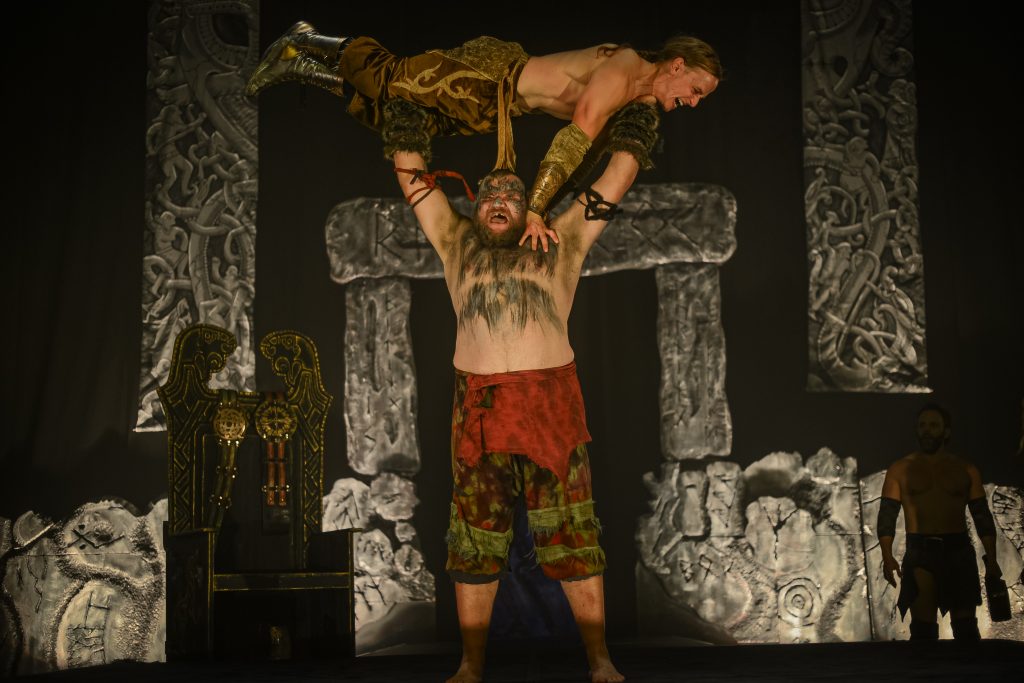
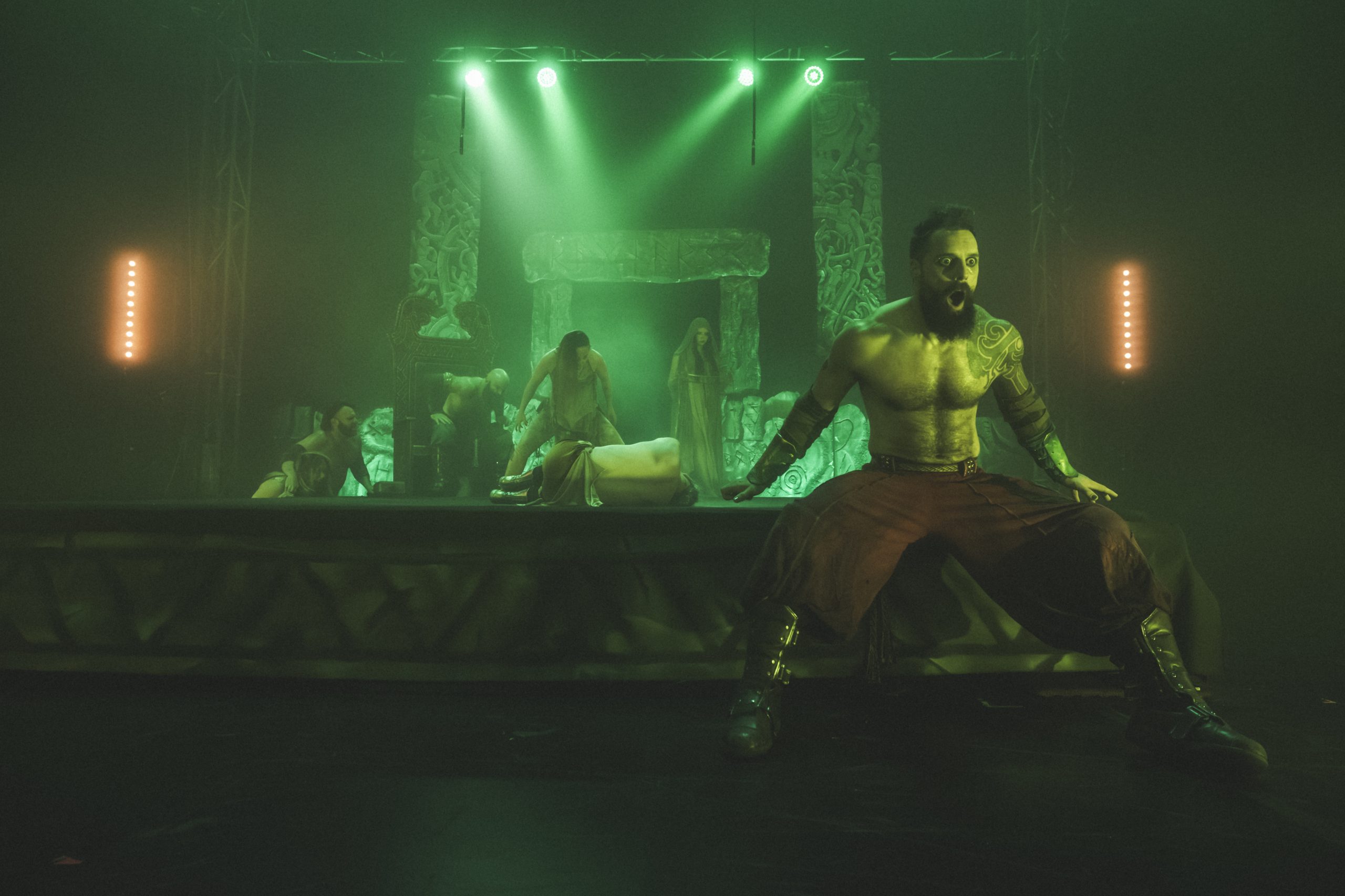
The show weaves ancient Nordic myths into a bold new narrative, one that has evolved continuously over the three years since The Mythological Theatre last appeared in the big ring at the Royal & Derngate. This retelling begins well before the point where we usually encounter Odin (HT Drake) and Loki in more traditional versions of the myths.
This retelling is a mix of incest, treachery, revenge and, of course… lots of fighting.
For those already familiar with the characters, be it from the Roger Lancelyn Green retellings, Jack Kirby’s majestic comic adaptations or the more recent Marvel movies, the main players; scheming Loki, wise Odin, the mighty but dumb, Thor (JD Knight), beautiful Baldr (Beau Charles) and lovely warrior Freyja (Heidi Katrina) all present recognizable characters.
The cast of ten are all professional wrestlers, physical performers and stuntpeople with years of experience across the world, with the possible exception of the weaver of costumes and fates, Melanie Watson (Skuld).
Immersive Theatre
The multi-format, multi-configuration Derngate auditorium allows a wrestling ring to be set up in the round, giving an immersive experience and supporting the connection between the myths and wrestling.
I’ve never really followed professional wrestling, but from my perspective, the matches are superbly staged, loud, and showcase the performers’ skills as both wrestlers and entertainers. The audience animatedly discusses the more audacious moves during the interval, with the biggest ones reprised in the final bout.
I think this show succeeds in improving the perception of wrestling as a phenomenal performance art, using superhuman physicality to bring these myths to life.
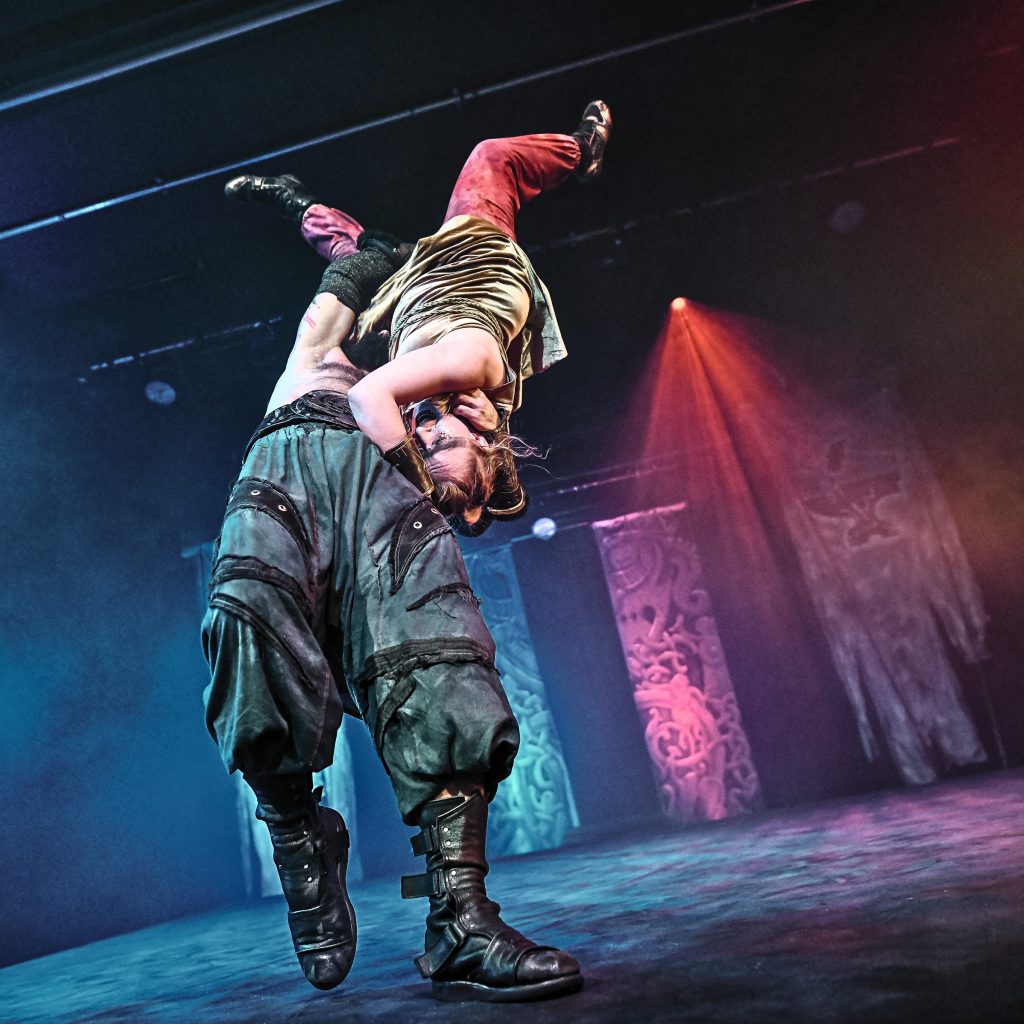
Audience vocal participation was actively encouraged with the fighting spilling over into the aisles and at one point, the whole audience loudly chanting support for Loki.
We see Odin, assisted by Loki, build his power base and his extended family, through diplomacy, deceit and strength, all of these evident in an early brawl with Loki’s half-sister Gullvieg (Louise Young), ending in a hostage swap to maintain the peace and further increase Odin’s adoptive brood.
By winning the belts of power from the champions of the nine worlds, the connection between symbolic belts and professional wrestling is, one hopes, clear to all. And just as in professional wrestling, choices made along the way come back to bite Odin in the second act—none more so than his disowning of Loki’s children: Fenrir (Charlie Spooner), Jormungandr (Sam Gardiner), and Hel (Stacey Coad). The latter gives a minxy performance as Loki’s “mistletoe,” an introduction filled with foreshadowing for those familiar with the storie
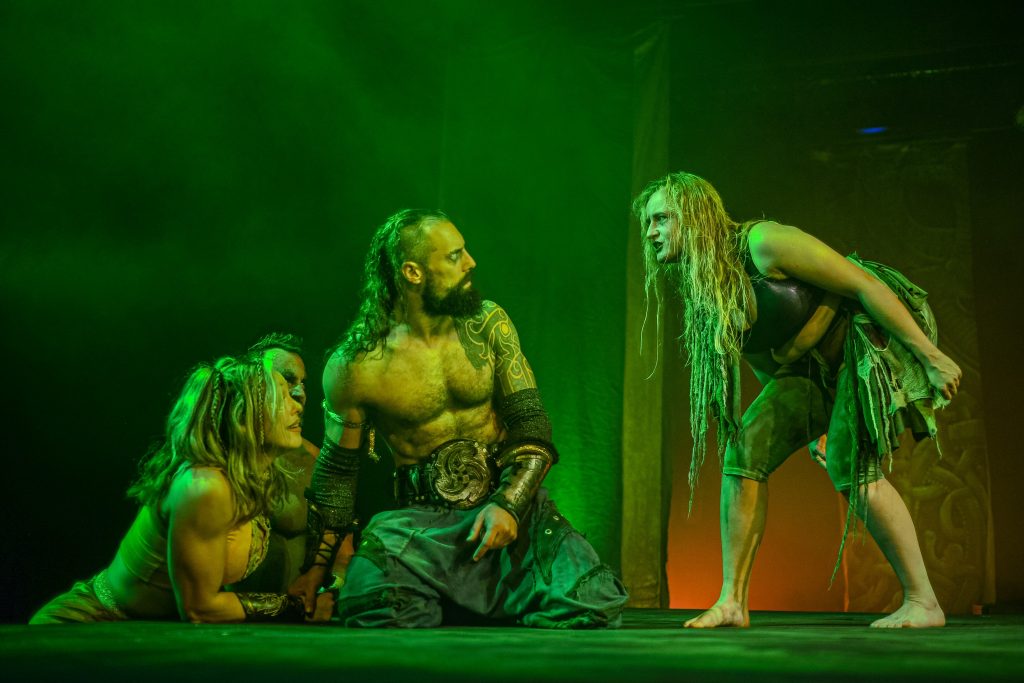
Those stories are not all presented here.
Most happen offstage during the interval and are recapped by Loki thus making more room for the story of the rise of Asgard and Odin’s attempts to forestall Ragnarök and (spoilers) we do get to see Thor in a dress.
If there is a flaw in the show, I would say that the sensible lack of body mics—relying instead on just four microphones at the ring corners—meant some of the exposition was not easy to hear, making the show difficult to follow for those without a mythic background.
The show receives no grants, no arts funding and no external investment, being self-funded from its days as a cult classic at the Edinburgh Festival Fringe to its current touring status.
Odin’s final line is “that history is written by the victors”, I’d like to finish with a quote from Ed Gamester;
“In this era of screens, artificial intelligence and minimal human interaction, it is more important than ever that storytelling as a shared human experience – is cultivated and maintained”
and I believe that this production of Mythos: Ragnarök pulls it off, with a fun show suitable for all ages, and the look on the faces of the younger members of the audience (and me) when they had the chance to have their photo taken.
For details of the show’s current tour and to buy tickets visit: https://mythosragnarok.co.uk/