
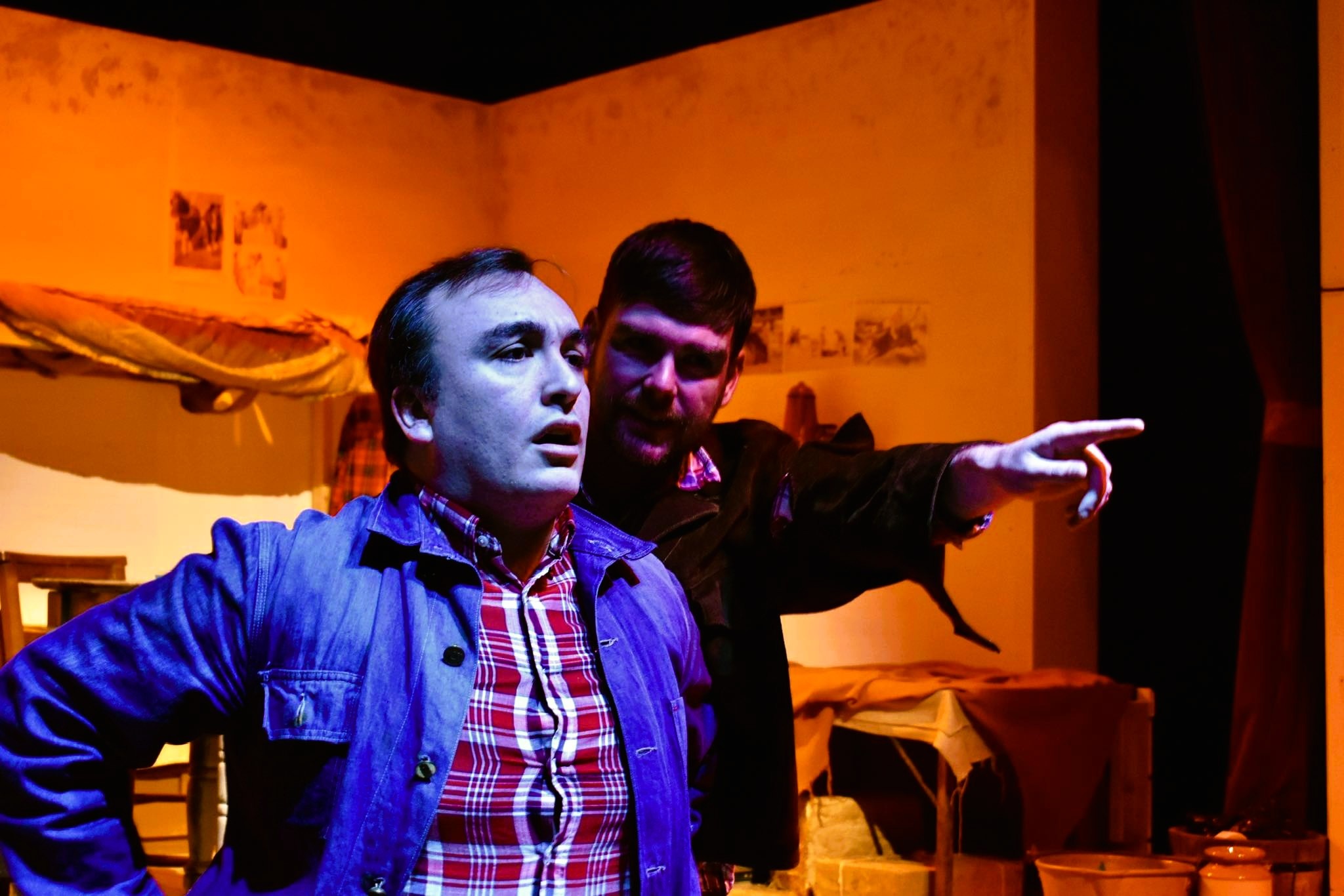
by Sarah Becker
This adaptation brought out the emotional core of the play.
I went to the closing night of the Playhouse Theatre Northampton’s amateur adaptation of Of Mice and Men, directed by Rob Kendall, at Christ Church Hall, Northampton.
Sometimes you have to see things through to the very end to be reminded why certain stories endure, and John Steinbeck’s Of Mice and Men is one of those.
Even knowing what’s coming, the final scene still tugged at the heartstrings — a credit to the performances, which brought out the friendship and care at the heart of Steinbeck’s tale between two men.
For anyone unfamiliar with the story, Steinbeck’s tale is an emotional one, and this production didn’t shy away from that. The play follows two migrant ranch workers in 1930s California chasing the dream of owning a small farm during the Great Depression. George is clever and protective, while Lennie is physically strong but intellectually disabled, often causing harm without meaning to.
The opening scene introduces the pair and sets the stage for the events to follow. Lennie keeps “doing bad things” because of his fondness for petting soft objects, and George scolds him after he accidentally kills a mouse while trying to stroke it.
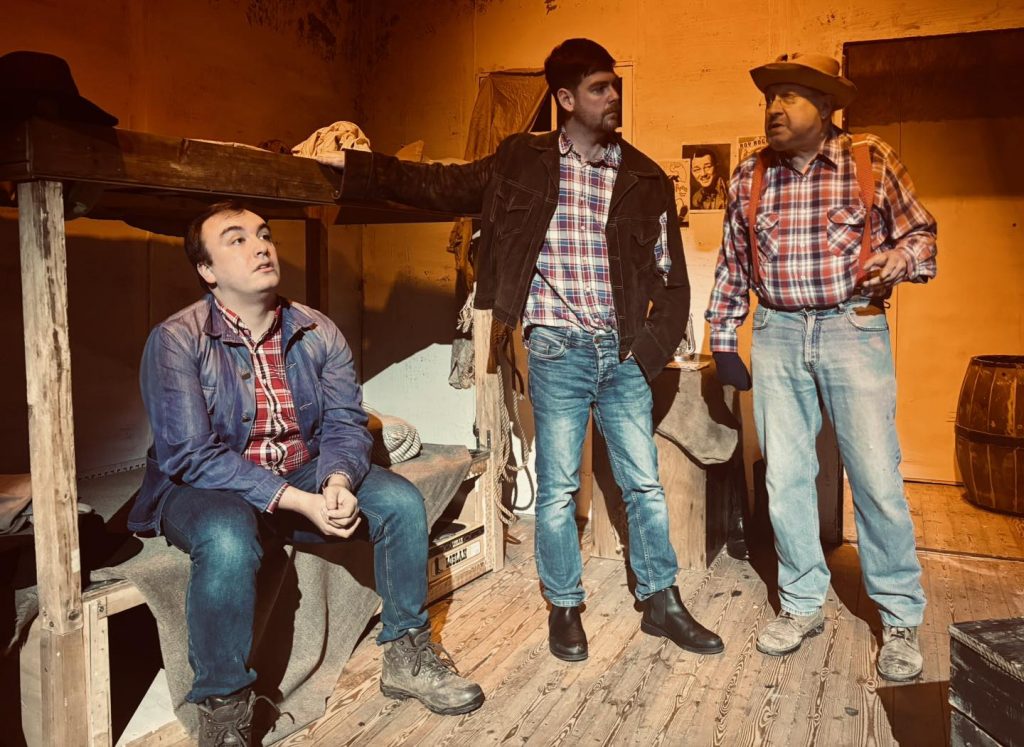
Jake Turner as George and Anderson North as Lennie deliver strong, committed performances. The production achieved it’s aim of anchoring the production with a sense of responsibility and care between the two men; you could tell that Jake’s scolding of Lennie came from a place of care and frustration.
Shane McCormack brought a menacing edge to Curly, the boss’s son, fuelled by insecurity and resentment towards men bigger than him. His lonely wife, played by Holly Hughes-Rowlands, was convincing in her wandering eye, which masked her isolation.
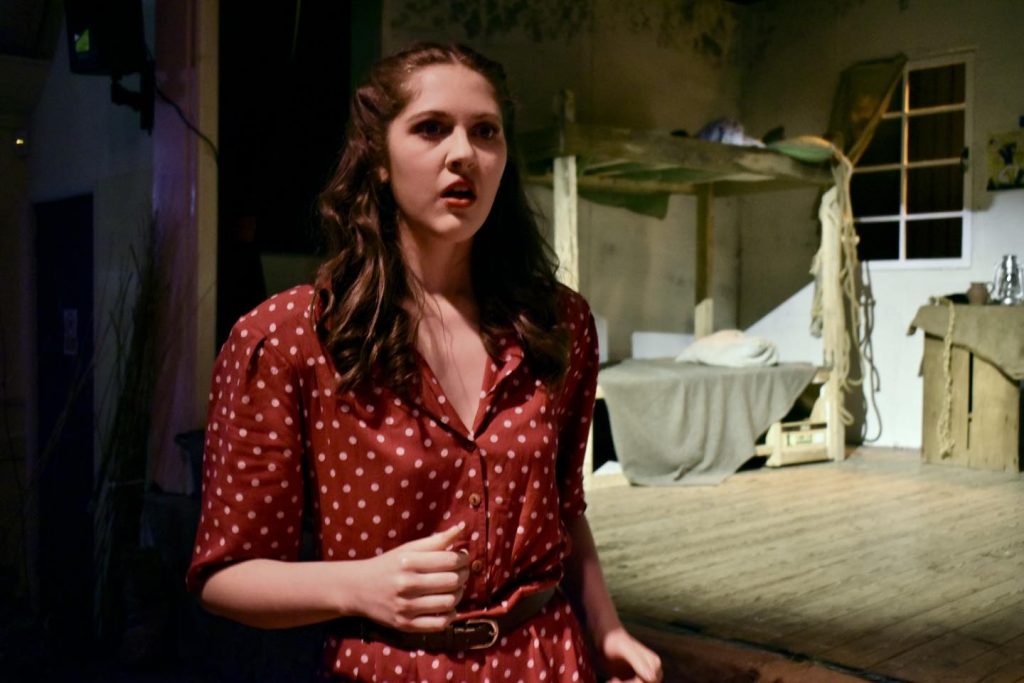
One of the most enjoyable aspects of the production was the nuance and differences each character brought to the table. The play handled its emotional beats well — from the shooting of Candy’s dog (Simon Rye), to Curly’s wife’s loneliness, to the dream George and Lennie share of one day owning their own ranch.
The second half did feel a touch long, and I’ll admit my attention wandered slightly at points. This was a classic retelling that didn’t bring anything particularly new to the table. That said, the pacing didn’t undo what the production ultimately achieved. When we reached the final scene — the one we all know is coming — it still hit hard, with a quiet sadness the audience seemed to feel collectively.
Overall, this was a solid and emotionally engaging am-dram production, and a reminder that local theatre, when it gets the performances right, can still make familiar stories feel worth revisiting. The next day, the emotional core still lingered in my mind.